


Paul Strand

In 1917 Paul Strand said that if one were to use photography honestly he must have "a real respect for the thing in front of him," which he would express "through a range of almost infinite tonal values which lie beyond the skill of human hand." The last half of the statement has to do with photographic aesthetics, the first half with photographic morality. "A real respect for the thing in front of him" implies that the subject is not merely the occasion but the reason for the picture.

This stern creed (rather than technical and aesthetic positions) was perhaps the real cornerstone of belief in straight photography. It was a proposition more or less accepted by most advanced photographers, especially in the United States, between the two World Wars. Accepted at least in theory. Practice was another matter; photographers had after all become photographers because they enjoyed the mysterious and often nonrational excitement of picture-making.

It is interesting that Strand himself conformed to his theory more strictly as he matured. His work before 1920 exhibits a highly abstract bent and an obvious pleasure in graphic adventures. As the years passed his pictures became progressively more natural and more calm.

One of the most beautiful and most influential parts of Strand's heroic oeuvre is the series of closeup nature studies that he began in the early twenties. These pictures are not merely descriptions of particular botanical or geological forms; they are, rather, miniature landscapes, organized with the same rigor and described with the same sensitivity to light and space that Strand would have accorded a grand vista. When the great wild continent had been finally conquered, Strand rediscovered the rhythms of the wilderness in microcosm.
from "Looking at Photographs" by John Szarkowski
 Tir a'Mhurain: Outer Hebrides
In 1954 Paul Strand and his wife Hazel spent three months traversing the rugged island of South Uist, off the west coast of Scotland. Tir a'Mhurain reflects the impressions they gathered during their stay. Juxtaposing people and landscape, Strand's photographs depict the perfect complicity he saw between nature and habitation in this wild terrain.
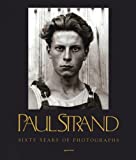
 Paul Strand: Sixty Years Of Photographs (Aperture Monograph)
Before his death in 1976 at age eighty-five, Strand combed his photographic prints and his many books with an eye to the completion of this volume. Seen here is the summation of a lifework, from the first abstract photographs to the series of plant photographs taken in the last years of his life.
- The material of the artist lies not within himself nor in the fabrications of his imagination, but in the world around him. The element which gives life to the great Picassos and Cezannes, to the paintings of Van Gogh, is the relationship of the artist to context, to the truth of the real world. It is the way he sees this world and translates it into art that determines whether the work of art becomes a new and active force within reality, to widen and transform man's experience. The artist's world is limitless. It can be found anywhere far from where he lives or a few feet away. It is always on his doorstep.
- Paul Strand. Retrospectiva 1915-1976
- Paul Strand: Under the Darkcloth, Part 1 of 6
- Paul Strand: Under the Darkcloth, Part 2 of 6
- Paul Strand: Under the Darkcloth, Part 3 of 6
- Paul Strand: Under the Darkcloth, Part 4 of 6
- Paul Strand: Under the Darkcloth, Part 5 of 6
- Paul Strand: Under the Darkcloth, Part 6 of 6

